Elie Nadelman
Peter Fischli David Weiss
27 June 2026
Opening Friday, 10 April, 6-8pm
Elie Nadelman
Peter Fischli David Weiss
10 April - 23 May 2026
opening on Friday, 10 April, 6-8pm
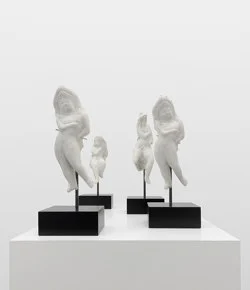
Following the stock market crash of 1929, Elie Nadelman (1882-1946) reduced his personal real estate holdings in Manhattan and Riverdale, and eventually had to dismantle his groundbreaking folk art collection, which he had displayed as a private museum. Around the same time, he started to experiment with the idea of serially produced sculptures and to work with inexpensive materials. Alongside papier-mâché, Nadelman developed various techniques with materials such as plaster casting, terra-cotta, ceramics, and “galvano-plastique” (electroplated plaster, a cost-effective substitute for bronze).
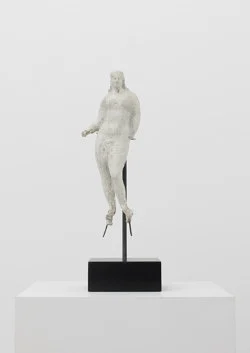
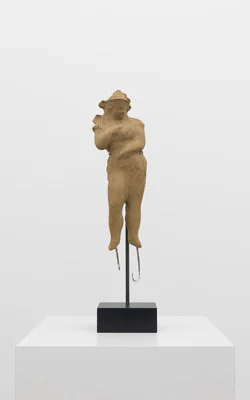
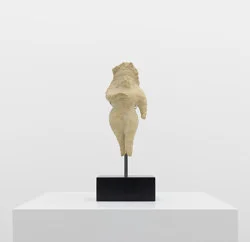
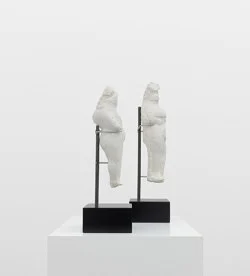
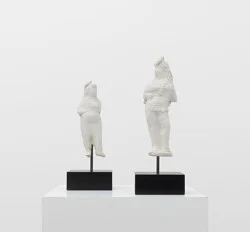
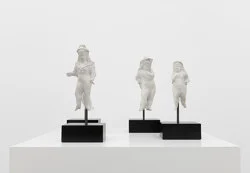
Unlike the classical Greek and Roman sculptures that served as the models for some of his earlier work, for his new works Nadelman began to look at so-called Tanagra figurines, small antique sculptures with simplified features that had been produced in high numbers and used as grave goods.
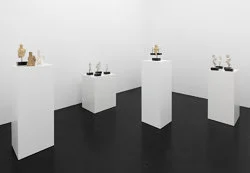
While making these new works he turned to a smaller scale. Nadelman developed a vocabulary of figures with smooth, rounded contours, and experimented with composite casting to yield slight variations on the poses of his motifs, which incorporated, along with the Tanagra sculptures, vaudeville dancers, circus performers, ribbon bows, and dogs.
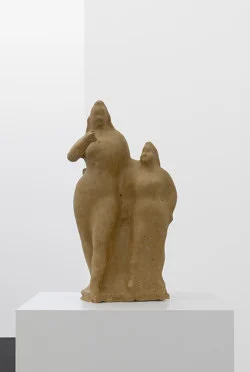
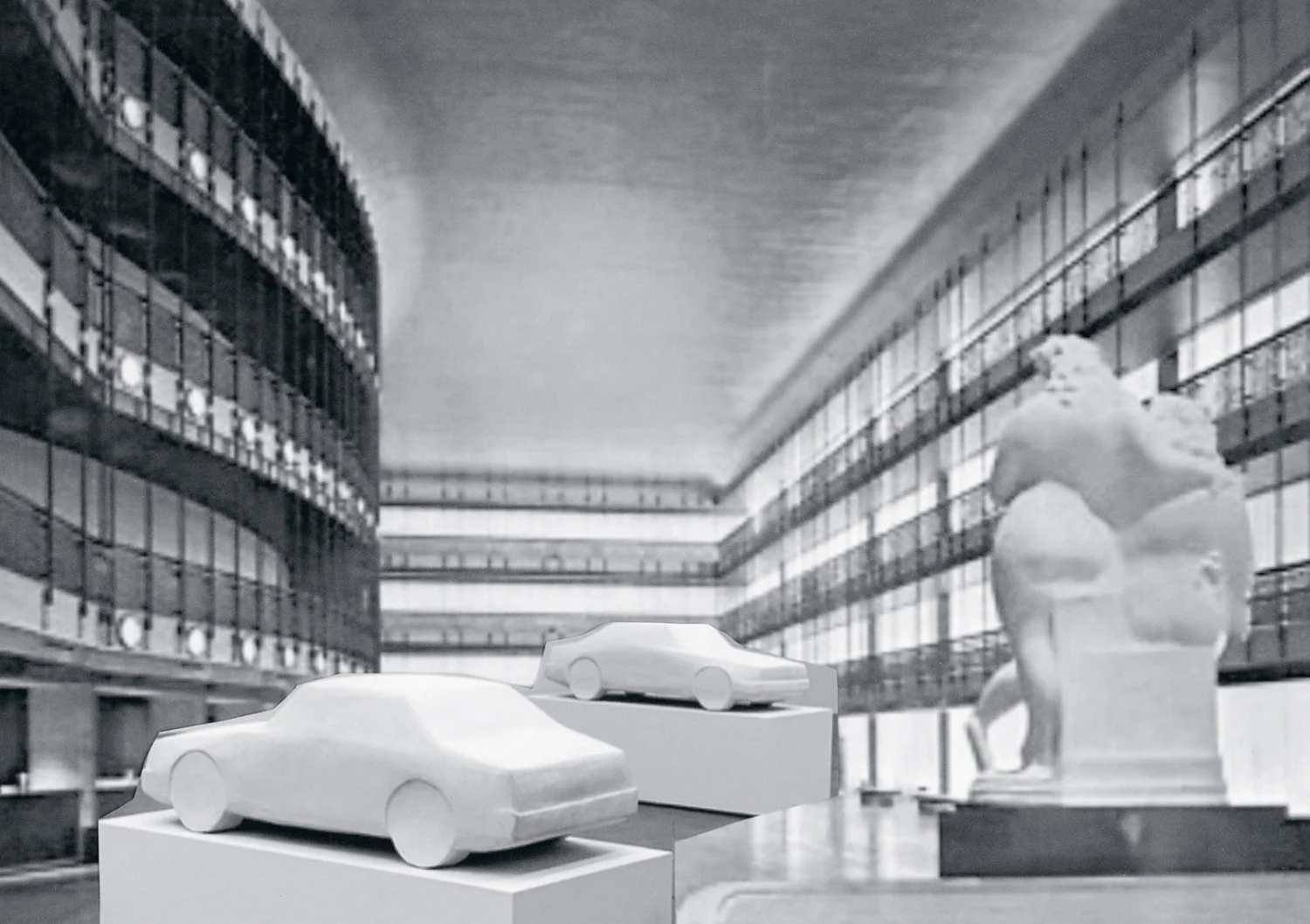
One slightly earlier example of his papier-mâché works, “Two Circus Women” (c. 1928-29), was later used as maquettes for the permanent installation of two marble statues in Lincoln Center’s New York State Theater (now the David H. Koch Theater), posthumously commissioned by Philip Johnson and revealed in 1962.
It was exactly here where Peter Fischli and David Weiss, working on a commission for a public art project at Lincoln Square in the early 2000’s, first became familiar with the work of Elie Nadelman. Coming from an artistic education where the verdict of non-figuration was still more or less intact, Fischli and Weiss had, since the beginning of their practice, been looking for examples of figuration that persisted despite this imperative of post-war modernism. (One example would have been the Swiss sculptor Karl Geiser.) This pursuit also lead them to a tradition of amateur craftsmanship, famously exemplified in their 1981 installation “Suddenly This Overview,” a series of small unfired clay sculptures that imaginatively recreate various events in human history as well as vignettes of daily life atop a range of white pedestals.
For the Lincoln Square commission, Fischli and Weiss proposed a group of their Hostesses sculptures. Resisting the lure of monumentality, they preferred instead to show the sculptures at their original scale, which would have appeared emphatically small on the huge plaza. The Hostesses had been produced in the late 1980’s and were originally exhibited together with airport photographs and car sculptures.
Even though the Hostesses had been conceived before Fischli and Weiss became aware of Nadelman’s work, they nonetheless have a resemblance to Nadelman’s figures. Like Nadelman’s sculptures, the Hostesses were not so much first-order depictions of human beings as they were depictions of sculptures, or of historical ideas of sculptural representations of figures.
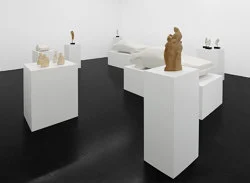
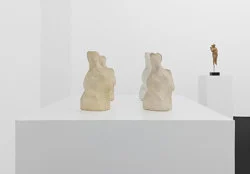
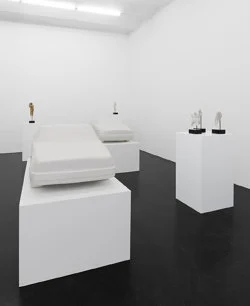
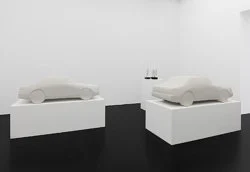
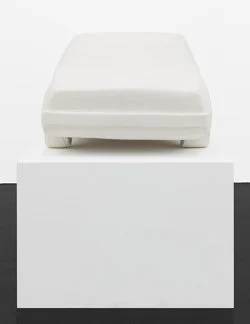
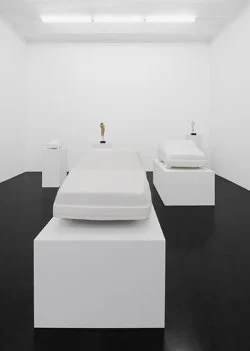
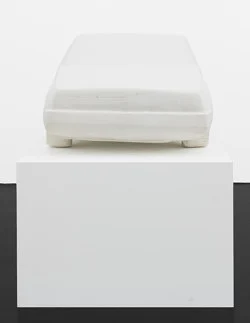
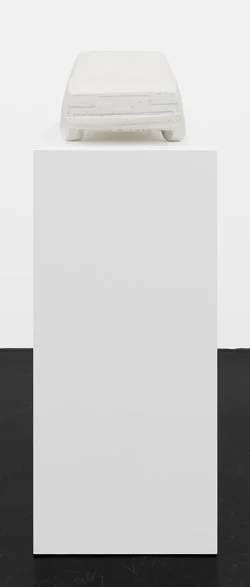
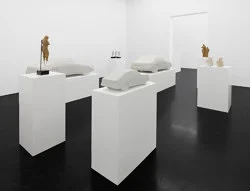
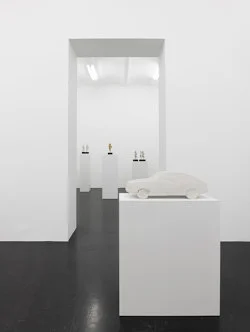
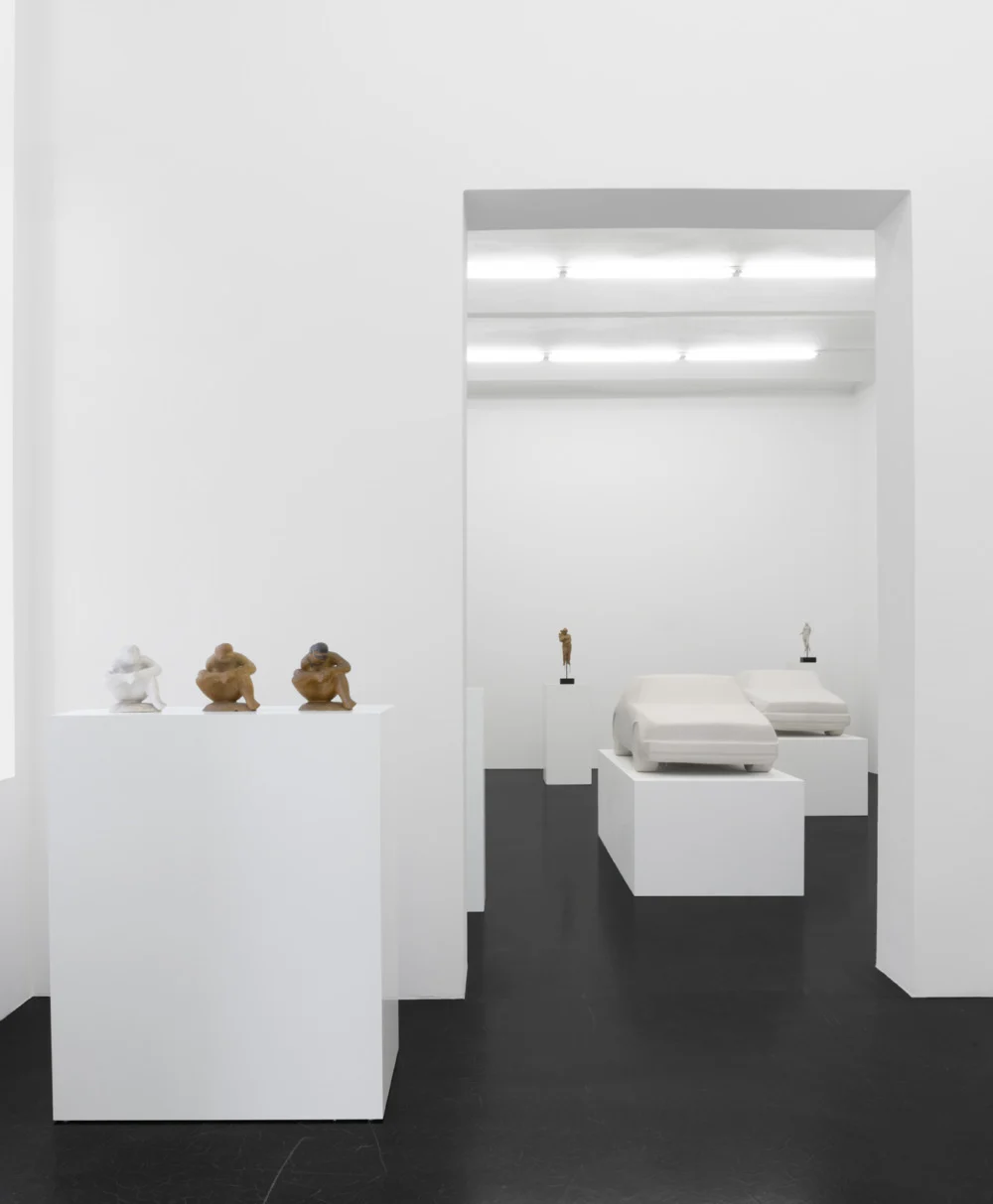
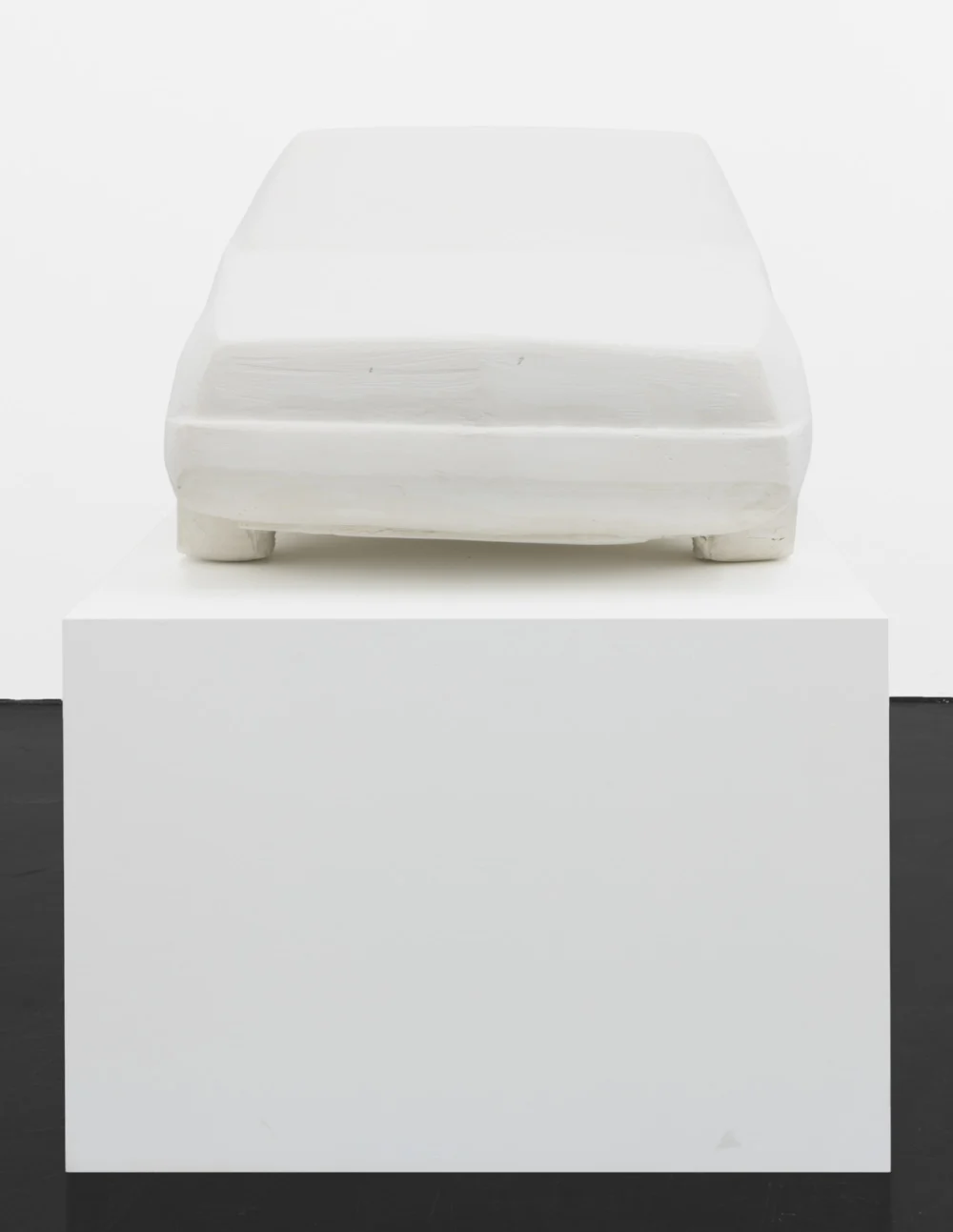
In our new exhibition, a fairly comprehensive group of late Nadelman figurines are juxtaposed with three of Fischli and Weiss’s Car sculptures. The Car Sculptures predate the Hostesses. They exist as smooth white plaster sculptures and, even earlier, cast in black rubber, for which one of the sculptures shown here served as a model for the mold. As depictions of ordinary cars, they were introduced into Fischli and Weiss’s oeuvre as representations of the then everyday present. Sanded down and nondescript, their features recall something familiar though faint, ghosts of the ubiquitous. They occupy a particular go-between of figuration, as they depicted something realistic but, as machines, were not figurative as such, echoing the machines in the modernist canon, whose representations were an exception to the rule of non-figuration.

Elie Nadelman
Peter Fischli David Weiss
Installation view Galerie Buchholz, Köln 2026

Elie Nadelman
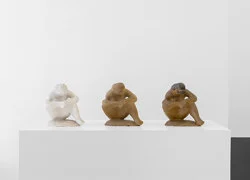
Untitled (‘Spinario’ - seated woman), n.d. (ca. 1930-1935)
plaster
18 x 18 x 12.5 cm
Untitled (‘Spinario’ - seated woman), n.d. (ca. 1930-1935)
papermache
18.4 x 17.8 x 12.7 cm
Untitled (‘Spinario’ - seated woman), n.d. (ca. 1930-1935)
papermache, paint
17.8 x 16.6 x 14 cm
Installation view Galerie Buchholz, Köln 2026

Elie Nadelman
Peter Fischli David Weiss
Installation view Galerie Buchholz, Köln 2026

Elie Nadelman
Installation view Galerie Buchholz, Köln 2026

Elie Nadelman
“Two Figures”, n.d. (1930-1935)
papermache on plaster
43 x 21 x 13.5 cm
Installation view Galerie Buchholz, Köln 2026

Elie Nadelman
Peter Fischli David Weiss
Installation view Galerie Buchholz, Köln 2026

Elie Nadelman
Peter Fischli David Weiss
Installation view Galerie Buchholz, Köln 2026

Elie Nadelman
Installation view Galerie Buchholz, Köln 2026

Elie Nadelman
Peter Fischli David Weiss
Installation view Galerie Buchholz, Köln 2026

Elie Nadelman
Peter Fischli David Weiss
Installation view Galerie Buchholz, Köln 2026

Elie Nadelman
Peter Fischli David Weiss
Installation view Galerie Buchholz, Köln 2026

Peter Fischli David Weiss
“Car”, 1988
plaster on metal and wood
sculpture 69 x 49 x 148 cm
pedestal 80 x 55 x 165 cm
Installation view Galerie Buchholz, Köln 2026

Elie Nadelman
Peter Fischli David Weiss
Installation view Galerie Buchholz, Köln 2026

Elie Nadelman
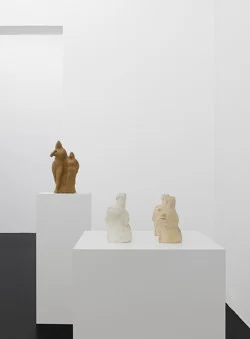
Untitled, n.d. (ca. 1938-1946)
plaster
22 x 7.5 x 6.5 cm
Untitled, n.d. (ca. 1938-1946)
plaster
20 x 13 x 6 cm
Untitled, n.d. (ca. 1938-1946)
plaster
19.5 x 9 x 7 cm
Installation view Galerie Buchholz, Köln 2026

Elie Nadelman
Peter Fischli David Weiss
Installation view Galerie Buchholz, Köln 2026
Peter Fischli David Weiss
“Car”, 1988
plaster on metal and wood
sculpture 69 x 49 x 148 cm
pedestal 80 x 55 x 165 cm
Installation view Galerie Buchholz, Köln 2026

Elie Nadelman
Untitled, n.d. (ca. 1938-1946)
plaster, metal
32 x 11 x 6.5 cm
Installation view Galerie Buchholz, Köln 2026

Elie Nadelman
Untitled, n.d. (ca. 1938-1946)
plaster, papermache, metal
40 x 11 x 8 cm
Installation view Galerie Buchholz, Köln 2026

Elie Nadelman
Peter Fischli David Weiss
Installation view Galerie Buchholz, Köln 2026
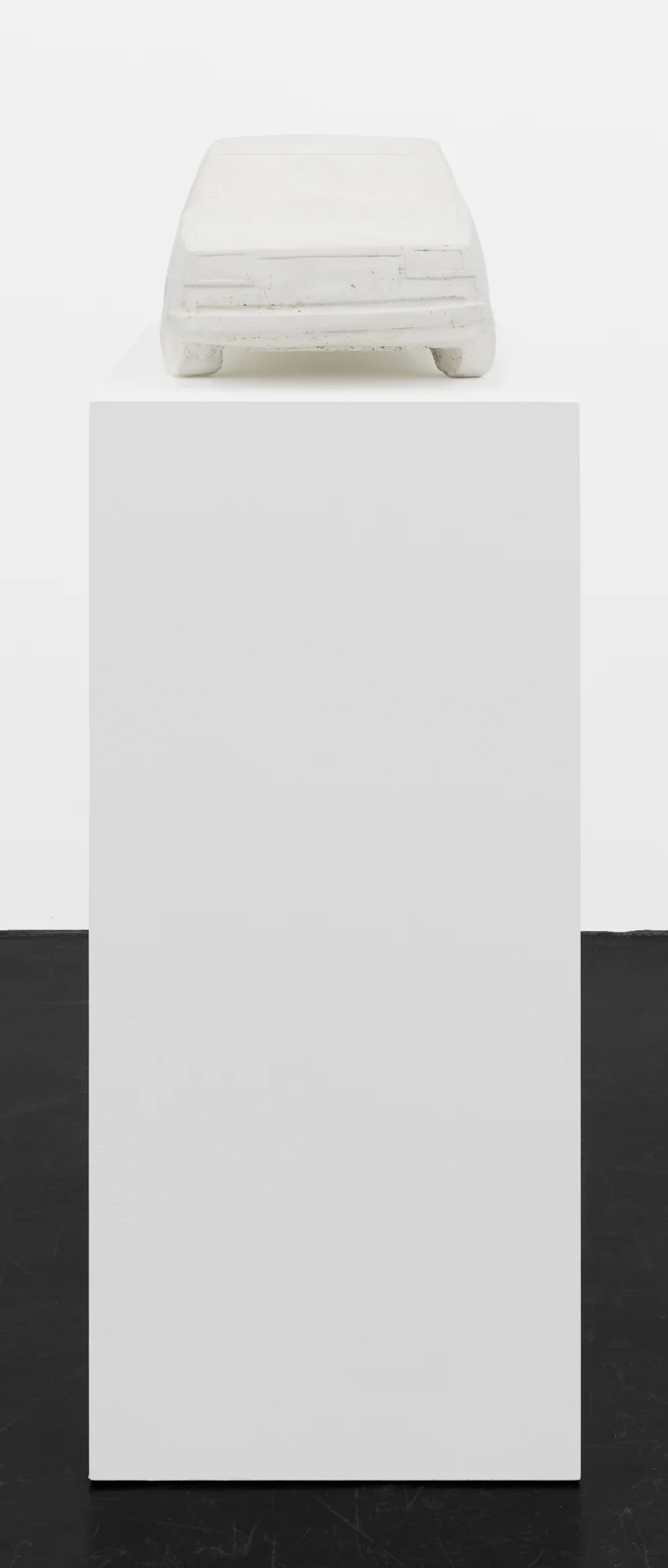
Peter Fischli David Weiss
“Car”, 1986-1987
plaster on metal and wood
sculpture: 20 x 60 x 27 cm
pedestal: 80 x 70 x 35 cm
Installation view Galerie Buchholz, Köln 2026

Elie Nadelman
Peter Fischli David Weiss
Installation view Galerie Buchholz, Köln 2026

Elie Nadelman
Peter Fischli David Weiss
Installation view Galerie Buchholz, Köln 2026

Elie Nadelman
Installation view Galerie Buchholz, Köln 2026

Elie Nadelman
Installation view Galerie Buchholz, Köln 2026

Elie Nadelman
Untitled, n.d. (ca 1938-1946)
plaster
21.5 x 9 x 8 cm
Installation view Galerie Buchholz, Köln 2026

Elie Nadelman
Untitled, n.d. (ca. 1938-1946)
plaster
22 x 8 x 6 cm
Untitled, n.d. (ca. 1938-1946)
plaster
27 x 10 x 6.5 cm
Installation view Galerie Buchholz, Köln 2026

Elie Nadelman
Untitled, n.d. (ca. 1938-1946)
plaster
22 x 8 x 6 cm
Untitled, n.d. (ca. 1938-1946)
plaster
27 x 10 x 6.5 cm
Installation view Galerie Buchholz, Köln 2026
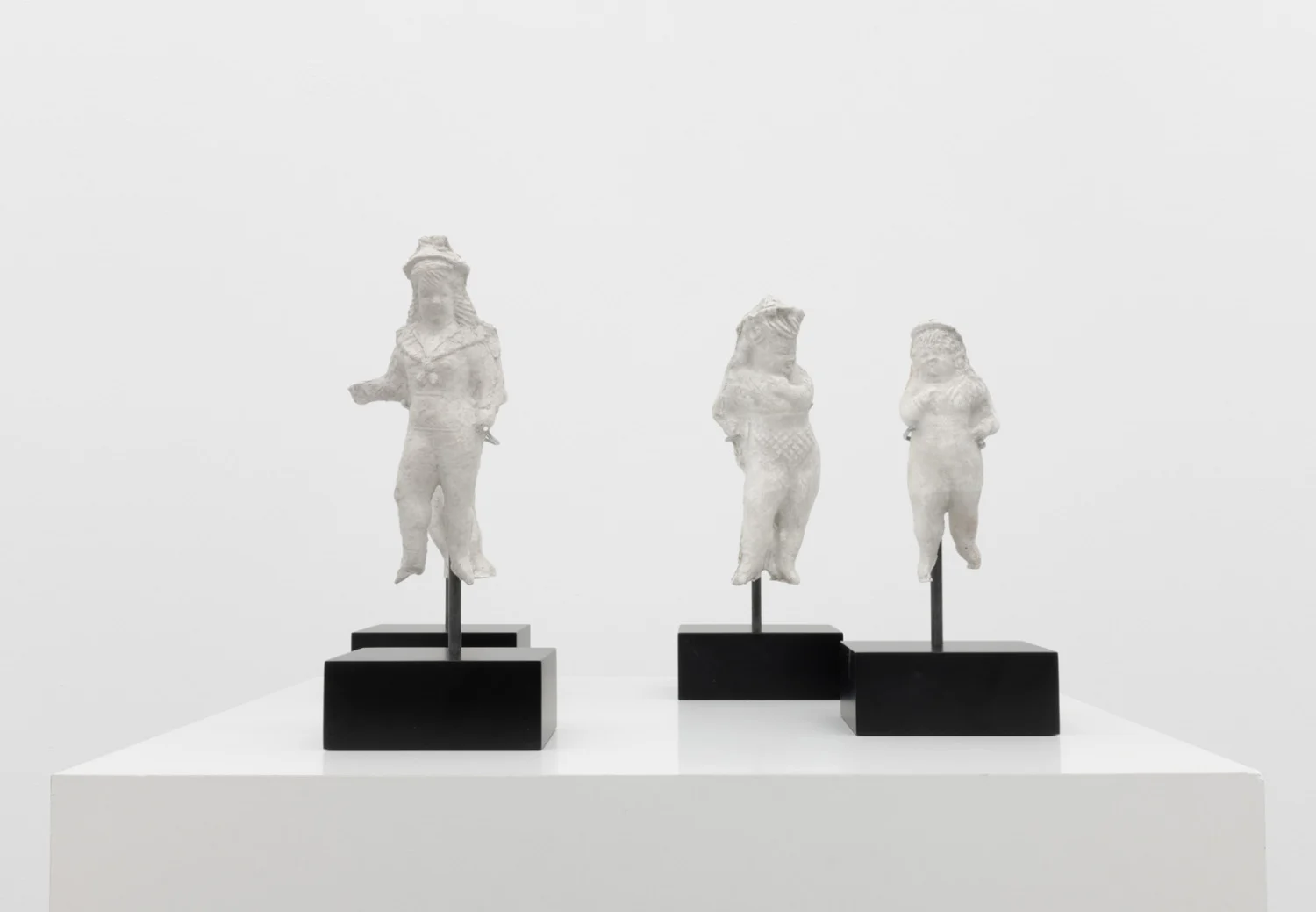
Elie Nadelman
Untitled, n.d. (ca. 1938-1946)
plaster
21 x 10 x 5.5 cm
Untitled, n.d. (ca. 1938-1946)
plaster
23 x 8.5 x 7.7 cm
Untitled, n.d. (ca. 1938-1946)
plaster
17 x 7 x 4.5 cm
Installation view Galerie Buchholz, Köln 2026

Elie Nadelman
Untitled, n.d. (ca. 1938-1946)
plaster, partially glazed
23 x 11 x 8 cm
Untitled, n.d. (ca. 1938-1946)
plaster, terracotta
20 x 11 x 8 cm
Untitled, n.d. (ca. 1938-1946)
plaster, terracotta
24 x 14 x 12 cm
Installation view Galerie Buchholz, Köln 2026

Elie Nadelman
Installation view Galerie Buchholz, Köln 2026